SERVING EAST COBB AND SURROUNDING AREAS

Tree Cabling and Bracing 101: Saving Vinings' Century-Old White Oaks Before Winter Storms
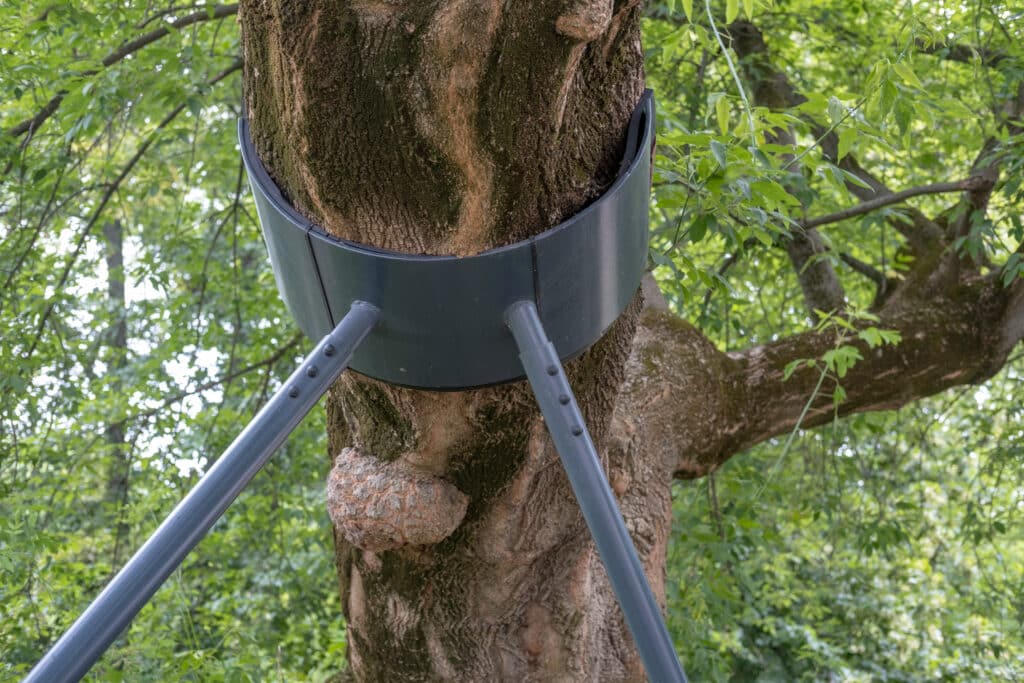
You’ve probably stood in your yard after a windy night, looked up at the massive white oak that was here long before your house was, and wondered whether the split where its two big trunks meet is getting wider. It’s a fair question. Trees that have shaded Vinings homes for a century carry enormous weight in their canopies, and the joints holding it all together don’t always age gracefully. Vinings tree preservation usually starts with exactly that kind of hunch.
Here’s the direct answer: tree cabling and bracing are support systems that limit how far weak branch unions can move in the wind, so a structurally flawed but otherwise healthy oak can stand through storms it might not survive on its own. Installed and maintained properly by a qualified arborist, these systems can add decades to the life of a mature tree that might otherwise be a removal candidate. They only work on the right trees, though, installed the right way and inspected on a regular schedule, which is what this guide covers.
If you’re already worried about a specific tree, the arborist team at Restoration Tree Care can take a look and give you an honest read on its condition. Scheduling a free estimate is a simple first step, and there’s no pressure attached to it. An assessment is also the only way to learn whether tree cabling and bracing is even the right conversation for your particular oak.
What Tree Cabling and Bracing Actually Do
Tree cabling and bracing don’t make a tree stronger. They limit movement. That distinction matters, because a weak union between two stems usually fails during dynamic loading, the violent swaying that happens when wind or ice whips the canopy around. Restrict how far the stems can travel and you sharply reduce the odds that the union tears apart.
Cables are installed high in the canopy, typically about two thirds of the way up from the defect, connecting two or more stems so they move together instead of against each other. Bracing rods work lower down. They’re threaded steel rods installed through the union itself, adding rigid reinforcement where a split has started or is likely to. On many mature oaks, arborists pair the two: rods stabilize the crotch while cables above reduce the leverage acting on it. That pairing is what most people actually mean when they say tree cabling and bracing.
The Tree Care Industry Association lists three classic reasons a tree needs supplemental support: a codominant stem, often called a V-crotch or weak junction; heavy or overextended branches that are unusually long for the species; and a weakly anchored tree. Separately, the industry works to the ANSI A300 standards, the national benchmark for tree care, which devote an entire part to supplemental support systems. A properly specified job isn’t guesswork. It’s an engineered response to a documented defect.
Static vs Dynamic Tree Cabling and Bracing Systems
Not all cables are alike, and the difference between the two main system types is worth understanding before you approve any tree cabling and bracing work.
Static systems use high-strength steel cable anchored into the wood with hardware such as eye bolts or lag hooks. They allow very little movement, which is the right call when a union is already cracked or could fail suddenly. The tradeoff is that the hardware penetrates the wood, and the tree builds less of its own reactive strength in that area.
Dynamic systems use synthetic rope, often with a built-in shock absorber, wrapped around the stems rather than bolted through them. They allow limited natural movement, so the tree keeps laying down response wood while still avoiding the extreme swings that cause failures. Dynamic cabling suits younger defects and unions that are weak but not yet failing, and it is often the gentler entry point into tree cabling and bracing.
Neither is universally better. A century-old white oak with a long-established split often gets a static system, sometimes with bracing rods, while a younger oak showing early included bark may do better with a dynamic setup. The right answer depends on the defect, the species, and the load, which is why an on-site assessment beats any rule of thumb about tree cabling and bracing you will find online.
Why Old White Oaks Develop Weak Unions
White oaks are the pride of older Vinings and Cobb County neighborhoods, and their structure explains both their beauty and their weakness. Many grew up in the open, without competition, so they forked low into several massive codominant stems instead of one dominant trunk.
The trouble hides inside those forks. When two stems grow tightly together in a narrow V, bark gets trapped in the union as both sides expand. Arborists call it included bark, and it prevents the wood from fusing properly. The fork looks solid from the ground but is essentially two beams leaning on each other with a seam of bark between them. Add a canopy weighing many tons, saturate the clay soil with a week of winter rain, then load every branch with ice, and that seam becomes the most likely failure point on the property. It is also the exact defect tree cabling and bracing was designed to address.
This is why winter matters so much here. University of Georgia Extension reports that thousands of Georgia trees are lost each year to ice, wind, and lightning damage, with annual property value losses estimated at more than $10 million. The same UGA reporting notes that hardwoods generally weather ice better than pines do, because a hardwood with a broken branch can fall back on the reserves in its root system. That resilience is real, and it is also beside the point when a codominant union splits. A tree that loses half its canopy to a torn fork is not recovering from a pruning wound. A cable installed in October is worth far more than a chainsaw in January.
Support or Removal? How the Decision Gets Made
Wanting to save old oak trees is the right instinct, but tree cabling and bracing aren’t the answer for every tree. A responsible arborist weighs three things before recommending support over removal.
First, overall health. Cabling a tree that’s substantially decayed or root-compromised just delays a failure while adding false confidence, and telling a stressed oak apart from a dying one is its own skill, as their post on drought-stressed oaks in East Cobb walks through. Second, the target. A flawed oak leaning over a bedroom carries different stakes than one over an empty back corner, and tree cabling and bracing is easier to justify when something valuable sits underneath. Third, the extent of the defect. A union that has already sheared, or a trunk with widespread decay at the base, usually can’t be engineered back to acceptable risk, and no amount of wanting to save old oak trees changes that.
When a tree passes those tests, preservation is often the smarter and more affordable path. Alongside support hardware, structural pruning trims weight from overextended limbs to lower the load the union carries, and ongoing plant health care keeps the tree vigorous enough to seal wounds and build strength. When a tree fails those tests, removal is the responsible call, and it’s better made calmly in autumn than at 2 a.m. during an ice storm. Knowing the difference is the heart of honest Vinings tree preservation, and it is why tree cabling and bracing should always follow an assessment rather than precede one.
Winter Storm Tree Prep for Vinings Homeowners
Effective winter storm tree prep starts well before the first freeze warning, and Vinings tree preservation mostly comes down to a short fall checklist. Walk your property and look up. Watch for tight V-shaped forks, cracks or seams at major unions, dead wood hanging in the canopy, mushrooms at the base, and soil heaving near the roots. None of these prove failure, but each one earns a professional look, and any of them could put tree cabling and bracing on the table.
The International Society of Arboriculture advises that mature trees should be inspected at least once a year. Once support hardware goes in, that annual habit becomes non-negotiable. Cables and rods are not install-and-forget equipment. Arborists re-check systems on a yearly cycle and after major storms, confirming tension and hardware condition and adjusting components as stems grow. A neglected cable can eventually do more harm than good, so the inspection schedule is part of the commitment, not an optional extra. Budget for tree cabling and bracing as an ongoing relationship with your tree, not a one-time purchase.
Restoration Tree Care is a tree care company based in Marietta with 30-plus years serving the community, offering tree assessments, pruning, plant health care, stump grinding, and emergency tree removal around the clock. The company serves Vinings and the broader Cobb County area, its work adheres to best practices established by the International Society of Arboriculture, and it is licensed and insured with both general liability and full workers’ compensation.
Questions Vinings Homeowners Ask
A properly installed system causes minimal harm relative to the protection it provides. Static hardware does penetrate the wood, but healthy oaks seal those small wounds well. A badly installed system is another story, which is why tree cabling and bracing is not a DIY project.
Steel systems commonly stay in service for decades with annual inspections, while synthetic dynamic systems generally need replacement sooner, depending on the product. Either way, the inspection cycle is what keeps tree cabling and bracing doing its job rather than quietly becoming a liability.
Pricing varies with the size of the tree, the number of stems connected, the system type, and how hard the canopy is to reach, so a free on-site estimate is the only accurate way to price the work. For larger preservation projects, financing options are available.
No. The tree must be healthy enough to justify the investment, and the defect must be one that movement control can actually address. That determination requires an on-site evaluation by a qualified arborist, not a guess from the driveway.
Give Your Oaks Another Century
The surest way to save old oak trees is to make winter storm tree prep a fall habit instead of a January regret. If a fork in your oak has been nagging at you, have it evaluated soon and ask whether tree cabling and bracing, pruning, or removal fits your situation. The team at Restoration Tree Care would be glad to walk the property with you, explain what they see in plain language, and help you make the call with confidence. Reach out to schedule your free estimate or call (470) 276-0495, and give that old oak its best shot at another hundred years.
Contact Us

Thomas Mercer
Thomas Mercer is the founder and CEO of Restoration Tree Care, a tree service based in Marietta, Georgia that cares for trees across East Cobb and the metro Atlanta area, including Acworth, Kennesaw, Woodstock, Powder Springs, and Alpharetta. His team handles pruning, tree removal, stump grinding, plant health care, and 24/7 emergency work after storms. Restoration Tree Care is licensed and insured, affiliated with the Tree Care Industry Association and the International Society of Arboriculture, and known for careful practices like controlled rigging and spike-free climbing that protect both trees and property. The company also has a bigger purpose that Thomas built into it from the start: a portion of every job goes to help free and restore victims of human trafficking. On the blog, he shares what his crews see in the field, helping homeowners keep their trees healthy and safe.